
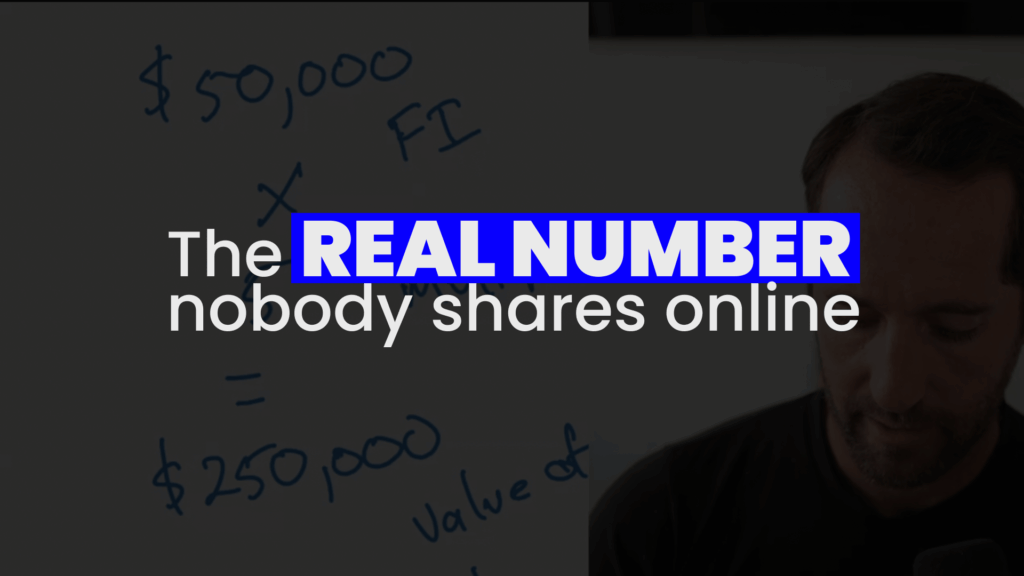
Welcome back to Laundromat Resource! In today’s episode, Jordan Berry dives deep into one of the most common—and most misunderstood—questions in the laundromat industry: How many laundromats do you ACTUALLY need to retire? Forget the hype and unrealistic Instagram goals. Jordan Berry breaks down the real math behind financial independence, covering everything from defining your personal “FI” (financial independence) number to calculating net operating income, dealing with loans, and understanding how factors like market, operating costs, and business size impact your path to retirement.
Whether you want a bare-bones lifestyle or full-blown freedom, this episode will give you practical tools to figure out your own number—and avoid building yourself straight into a stressful second job. If you’re ready for honest, no-fluff advice on using laundromats to fund your future, you’re in the right place!
1. Your “Retirement Number” Should Be Personal and Tied to Your Lifestyle
Jordan Berry emphasizes that the number of laundromats you need to retire or reach financial independence is based on your individual lifestyle and expenses—not a generic number like 10 or 20 that’s often thrown around online. Determine your own financial independence number by calculating your real annual personal expenses, then use that as your true goal rather than aiming for an arbitrary store count.
2. Understand Net Operating Income (NOI) and Multiples to Value Your Goal
A key framework from Jordan Berry is using Net Operating Income (NOI) and multiples to figure out how much laundromat value you need to own to fund your desired lifestyle. He explains that most laundromats sell for around 4.5x to 5.5x their NOI. Multiply your annual cash flow need by this multiple to get the total value of laundromats you need to own. For most people, this ends up being just 1–3 well-run laundromats, not dozens.
3. Progress from “Builder” Mode to “Harvester” Mode—Don’t Overextend
Many owners burn out because they keep acquiring laundromats without a clear exit goal, staying in constant “builder” mode. Jordan Berry stresses the importance of transitioning to “harvester” mode, where you consolidate, pay off debt, and focus on optimizing and enjoying the cash flow from your stores. This shift is what turns your laundromat investments into sustainable, freedom-providing assets—so don’t just keep scaling without purpose.
If you found these tips helpful, share them—and stay tuned for more industry insights from Laundromat Resource.
Free Strategy Zoom Call with Jordan:
https://calendly.com/laundromatresource/free-strategy-call?back=1
🔗 Resources and Links:
Make sure to watch the latest Laundromat Podcast Episode 249
Jordan Berry [00:00:00]:
You’ve heard the hype. Everyone’s saying boring businesses, and specifically laundromats, are the key to retiring early, getting that financial independence. And look, I am not going to argue that because I’ve literally built my life around helping people do exactly that. But I want to be honest with you for a second. With today’s prices, today’s competition, today’s operating costs, what does the math actually look like? Does it still work today? And that’s exactly the question I want to answer today’s video. By the end of this video, you’re going to know the real number of laundromats that you need to retire or to hit financial freedom based on your life. Not someone else’s Instagram life. Not the guru with seven stores telling you need all seven stores.
Jordan Berry [00:00:45]:
Your number is your life. So if you’re new here, I’m Jordan. I run laundromyresource.com and laundromatresource. I host laundromatresource podcast, currently top one and a half percent of podcasts globally, all about little laundromats. Interviewed hundreds of operators. I work with buyers and existing owners every single week. I’ve done over 51,400 consulting calls now in this industry specifically. And I’ve seen what the numbers actually look like across hundreds, not even thousands of real laundromats.
Jordan Berry [00:01:12]:
So I’m not pulling this out of thin air. Let’s get into it, and you can know exactly what you need to hit your number. So here’s a mistake. I see all the time somebody discovers laundromats, they get excited, and rightfully so. And the next thing you know, they’re saying things like, I want to own 20 laundromats. In fact, I did a poll one time on YouTube, and I think it was like 96% of people said they want to own 10 or more laundromats. And I always ask a question back when I talk to somebody who says that, why 10 y 20? Why that number of laundromats? And there’s never really a good answer for that. It’s just.
Jordan Berry [00:01:47]:
It’s a number that sounds impressive. It’s a number that somebody said on YouTube. It’s not tied to anything real about their actual life. It’s, listen, you want an empire, and I get that, but you don’t necessarily need an empire to hit that financial freedom, at least initially. I mean, you can scale beyond, but initially, you don’t need that. So here’s the problem with throwing out a number like 10, 20 laundromats, if you don’t know your number, you’ll just keep buying and you’ll buy your fifth store, your six store, your 10 store, not because you need to, but because you don’t know when you need to stop. And again, for some people, building the empire is in that journey. That is the goal.
Jordan Berry [00:02:25]:
But if your goal is to leave your 9 to 5 or financial independence, you may not need as many as you think. And that’s what we’re going to talk about today. What you’re building, though, if you continue to build, is not freedom. It’s a second job. A lot of times it’s bigger, more stressful job than the one you were trying to escape, which is not what you know. If you’re here now, that may not be what you’re trying to do. You’re trying to get that freedom, part of financial freedom. Before we talk about how many laundromats we’ve got to talk about, what are you actually trying to fund? What are you trying to do? What do you want your life to look like? Your number of laundromats depends on the life that you want.
Jordan Berry [00:03:02]:
Not on just, just a number you’re pulling out of thin air that somebody else picked for you. So let’s define this thing. Your financial independence number or phi number fi. Financial independence number is just the income you need every year from your laundromats to cover your personal expenses. That’s it. That’s what financial independence is. It’s the whole concept. It’s not a net worth target.
Jordan Berry [00:03:24]:
It’s not how much money you need to have in the bank. It’s how much do I spend in a year and how much income do I need coming in to cover that. And they’re basically. We’ll talk about it. In this framework, there’s basically three levels of financial independence that you can shoot for. The first one we’ll talk about is called lean five. That’s the bare bones, your mortgage or rent, food, utilities, insurance, the basics. The lights are on, the family’s fed.
Jordan Berry [00:03:48]:
Nothing is fancy. This is your I really never have to work again if I don’t want to number. But you’re also probably not flying to Europe every summer and you’re not living it up big. So that’s your lean phi. The second number is just normal fi. Financial independence. This is your current lifestyle. And I’ll, I’ll say that, you know, it might feel like, hey, why even have a lean 5? Why not get to normal fi? Well, I’ve got clients who Their number one goal is to get out of their job as quickly as possible.
Jordan Berry [00:04:20]:
And they’re willing to make a sacrifice on the income level, at least initially, you in order to do that. And that might be you right now. And Lean 5 might be the step that you need to be able to take that leap and leave your job or to leave that job for a part time job or a job that’s more fun, that maybe doesn’t pay as much or a passion project, something like that. Okay, so that’s where LeanFi comes in. But here’s your normal kind of financial independence. This is your current lifestyle. Whatever you spend now to live the way you live now, that’s what a laundromat income needs to cover to have four financial independence. And the third is what we call Fat Fi, Fat financial independence.
Jordan Berry [00:04:59]:
And that’s the version with the cushion. You probably can travel, have hobbies, that boat. I’ve been begging my wife to buy the second house. Eating out without checking the bill. You know, I heard, I think Secrets of Millionaire Mine. The author said, you know, a lot of people read by looking at the right side of the menu. That’s what, that’s how they decide what to order. That’s where the prices are.
Jordan Berry [00:05:21]:
Right? We want to look at the left side of the menu and order based on what we want to eat, not how much it costs. Right. This is the version that most people actually mean when they say retire. They want to live a good life, right? They want to have, you know, take that financial pressure off. That’s really what most of us are trying to do. So these are three different lives, three different numbers. And you can’t just pick how many laundromats you need until you pick which number you’re shooting for and, and what that number is. So let’s get into some actual examples here and give you some real numbers just to kind of make it real and to make it practical and tangible for you.
Jordan Berry [00:05:58]:
Okay, here’s some numbers for you. We’re going to just use this illustration, but let’s do a starting point of around $50,000 is your lean FI number. Now, real quick, these numbers can vary wildly, but let’s just use $50,000 for now. You can plug in your own number for a Lean Phi. So that’s a lean financial independence and financial independence or normal, we’ll use $100,000 and for Fat Fi, we’ll use $150,000. So this is for our examples. But again, maybe pause your video here and take a second and think about what are the numbers that you need to hit to hit these different levels. If you’re in Manhattan or you’re in Orange County, California, where I am, or Hawaii, where I also live, those numbers might be low for you.
Jordan Berry [00:06:57]:
If, however, you’re in Tulsa, Oklahoma, or Nebraska, maybe those numbers are high. I don’t know. That’s the whole point. You get to plug in your life, your numbers and what you need. We’re going to use these ones as an example, but maybe really do pause the video and come up with those numbers for you and, you know, maybe even take the step to pull up your bank statements, your credit card statements, whatever you have, and figure out what you’re actually spending, maybe your tax returns, I don’t know, what you’re actually spending in a year. Add a little buffer, and then that’s your real kind of normal financial independence number. All right? Now, once you have it, come back to the video and the rest of this video. It’s going to do a lot more for you once you have that number.
Jordan Berry [00:07:42]:
Now, real quick, before we jump into the numbers, I want to just talk about a quick concept here. I saw this. I apologize, whoever I saw this from, probably on a YouTube video or something. But it’s a concept that I want you to get comfortable with, called the income floor. Think of it like this. If you own a rental property, for example, the rent that comes in every month is your floor. If you own dividend stocks, the dividend is your floor. It’s the money that shows up whether you go into work that day or not, whether you go on that boat that you bought or.
Jordan Berry [00:08:14]:
Or not. Right? So laundromat, same thing. The net income from your store. And we’re going to talk about net income here a lot. The net income from your store, once everything is running, is your floor. It’s the money that comes in regardless of whether you’re at the gym, on a flight, hiking with your kids, whatever. The floor is what funds retirement. That floor is what gets you to financial independence.
Jordan Berry [00:08:37]:
So everything we’re about to calculate is just figuring out how high does that floor need to be and how many laundromats is it going to take to build that floor. Okay, so now we need to talk about the formula. This is the one that I want you to just tattoo onto your brain if you’re serious about this business. It’s called the net operating income. Or no, I. And if you’re, like, browsing around on biz by sell or BizQuest or Biz, whatever jungle, I Don’t know, all the biz sites or whatever. You might see net income, you might see cash flow, you might see ebitda. They’re all different numbers, but they often get used interchangeably as the net income on those sites.
Jordan Berry [00:09:18]:
So not always, but just, you know, so you’re aware, net income is what we’re looking at. And here’s what the net income is. You take all of the income that the store brings in from the washers, the dryers, vending, wash and fold, pick up and delivery, whatever the income sources are, and you add it all up. That’s your top line number right there. Then you’re going to subtract every single operating expense. Utilities, rent, staff, supplies, maintenance, insurance, management fees, if you have any, all that stuff. And what’s left is your net operating income. So money and minus money out.
Jordan Berry [00:09:52]:
But it’s important that you notice that net operating income or the NOI is calculated before debt. So if you take out a loan, which we’ll talk about, don’t worry, we’re going to talk about that too. If you take out a loan, we don’t subtract the loan payments yet from the net operating income. And the reason is, is that the NOI tells you what the business actually produces. Two people could buy the exact same laundromat. One pays cash, one borrows 80% alone, right, to buy and puts 20% down. The NOI. The net operating income is identical for both of those situations.
Jordan Berry [00:10:27]:
However, the cash flow will be wildly different between those two scenarios. So we want to start with the NOI because it’s the truth about the laundromats, the truth of how it’s actually performing. And once you know the noi, you can figure out everything else. Here’s where it all comes together for you. This is the math that you actually came to this video for. This is the best way to think about this. Laundromats are valued on a multiple of the net operating income. Okay? So today the average multiple you can expect to Pay is about 4 and a half to 5 and a half times the NOI.
Jordan Berry [00:11:02]:
So let’s say we’re working with the 5×5 times multiple. Just to keep it simple for my simple mind here. And we already know what our financial independence numbers are. Remember, you pause the video and you came up their financial independence number. So let’s say you need to be able to get to Lean Phi, you need, you know, that way you can quit your 9 to 5 or work part time or whatever. And let’s call that Arlene FI number for this example, $50,000. Now here’s a formula to calculate exactly how many laundromats you need to reach that financial independence number, that $50,000. Okay? So we’re going to take in our case $50,000 and we’re going to multiply that by our multiple.
Jordan Berry [00:11:46]:
So in our case, that’s going to be five and that’s going to equal the value of the laundroma need to reach financial independence. So for our example, we need $250,000 of laundromats in order to reach that financial independence number. That’s it. That’s the math. That’s the formula. So we’ve got our financial independence number times our multiple and that equals the value of the laundromats. Okay? Oh, that cut off a little, but you get the idea. So in our case, we need either one laundromat worth $250,000 or multiple laundromats whose values add up to $250,000 to reach that financial independence number.
Jordan Berry [00:12:33]:
For our fat financial independence, our fat fine number of $150,000 a year, we’re going to need $750,000 of laundromats. That’s 150,000 times our 5x multiple to reach that fat fine number. So in most cases, that particular scenario is going to be between one and three laundromats total. And I want you to sit with that for a second because notice what we didn’t say. We didn’t say 20, we didn’t say 50, we didn’t even say 10. For most people who actually do the math, the number is way smaller than they thought. To be able to reach even a fat phi number. A handful of well bought, well run laundromats can fund a really good life.
Jordan Berry [00:13:17]:
And listen, I grew up in my investing journey here on bigger pockets and calculating the number of doors that I needed to be able to retire. I invest in real estate. I love investing in real estate. However, when it comes to cash flow, when it comes to financial independence, real estate can’t touch the average real estate deal can’t touch the average base hit laundromat deal. When it comes to that reaching financial independence, you’re going to get there much quicker and with much less capital by buying one of these quote unquote boring businesses like a laundromat. But listen, we made some assumptions here, like the multiple. For example, I said, let’s just take a flat 5 just for my simple mind. So I could give you some examples here.
Jordan Berry [00:14:00]:
But if you’re not sure how to calculate the exact value of a laundromat. I did put together a free course. It’s on laundromatresource.com it’s absolutely free and that will give you the confidence you need to move forward on buying that first laundromat. It’s based on, like I said, over 1500 consulting calls, people asking the same questions over and over. I answer most of them in that course. It’s short, it’s three lessons long, it’s about an hour total and it will be totally worth your time if you are looking to buy your first laundromat. Elephant in the room here. Before anybody puts in the comments, Jordan what about loan payments? Let’s talk about that because that is going to affect the amount of laundromats that you need to hit that financial independent.
Jordan Berry [00:14:44]:
Now obviously if you’re, you know, strapped with cash, you got 250k in the bank and you need 50k, you could probably go out and buy one laundromat, all cash. You hit your 50k and go, you know, go surfing or whatever you want to do, play golf or whatever that you want to do with your life. But if you’re not, you know, strapped with cash over there, flush with cash and ready to throw it all around, you do need to use some debt or your number is a lot higher, then you’re probably going to need to use debt. And most people do. By the way, you’ll hear brokers saying you got to have cash, you don’t have to have cash. We work with clients every single day who use loans to buy laundromats, so don’t get discouraged by that. But your actual cash flow number is your NOI minus your loan payments. Which means if Your store produces $50,000 of NOI, but you have loan payments of $25,000 a year, you’re only walking away with $25,000 in real cash flow.
Jordan Berry [00:15:41]:
Now I say only that’s nothing to sneeze at. But you’re not hitting that lean fi Number of $50,000 if you’ve got loans with it. So if you’re highly leveraged, you’re going to need more stores to hit the same income floor. Or you’re going to need to add value to the laundromat. And that might be by managing the place more professionally, doing some marketing, raising prices, adding a drop off or pick up delivery services. There’s lots of different ways to add more value in a store once you own it. Or you might need to Buy more laundromats, or you might need to wait a little bit till you pay off the loans, because if you’re paid down or paid off, you need fewer laundromats. Obviously, I think about this in two phases.
Jordan Berry [00:16:24]:
Phase one is you’re building, right? You’re building your wealth. You’re building your floor, if you will. And this is where you use leverage on purpose because you can buy more value with less money by using leverage. That’s the. That’s the strength of using a loan, right? Not just because you can’t afford all cash, but because you can buy more than you could if you’re just using all cash, right? So you’re buying stores, you’re scaling, you’re using other people’s money or OPM to grow faster than you could with just your own cash. Cash flow is tighter if you use a loan, but you’re stacking assets. And actually your return on investment usually is higher because even though your cash flow is lower, the cash you put into it is also lower. Okay? So that’s when you’re building.
Jordan Berry [00:17:12]:
You’re in that building phase where you’re. You’re stacking assets. Phase two, however, is the harvester phase. This is where you slow down the buying. You pay down the debt. You maybe pay off a store or two, maybe use a. The debt snowball that Dave Ramsey loves or something to just start paying off your stores. And then cash flow starts to go way up.
Jordan Berry [00:17:35]:
The stress goes way down. That pressure that we feel to provide financially starts to go down as we start to harvest some of the value that we’ve created in our businesses. And this is the version that actually starts to feel like retirement. This is what we’re striving for. But like I said, unless you’ve got the cash upfront, it’s something we need to work towards. It’s something we need to move towards. It’s still going to take some time and some effort and some energy, but. But a whole lot less time, effort, and energy than working that 9 to 5 or even doing something like investing in real estate.
Jordan Berry [00:18:10]:
So here’s what I want to say, though. When I was explaining the numbers before, I spoke about how many laundromats you need in terms of how much value you need in the laundromat. I said something like, you need $250,000 worth of laundromats. So that’s true whether you use leverage or not. So, for example, if you buy a laundromat for $250,000 and you put down $100,000 and loan for the rest. You own $100,000 worth of laundromats and you need 150,000 more worth of value of laundromats to hit that lean FI number. And you can hit that by growing the business. You can hit that by paying down the loan.
Jordan Berry [00:18:50]:
You can hit that by buying another location. You can do all of those combined to do that. But that $250,000 worth of laundromats that you own is the target to hit that financial independence number of $50,000 in our example case. Right. Again, put in your own numbers. Most people who burn out in this business burn out because they stay in builder mode too long and you never flip to the harvest mode. Don’t do this. I see this happen over and over and over again.
Jordan Berry [00:19:19]:
People work a lot longer than they need to work at their jobs. People build a lot more than they need to build and sometimes build themselves right out of the business. So, you know, again, if you know those numbers, those financial independence numbers beforehand, you can set up a stop here. Like, hey, we can stop. We own $250,000 or $750,000 or whatever your number is of laundromats. We can stop now. Now, I need to talk a little bit because this is a question I get all the time about, you know, different markets. Just for a second, I walked you through all these really easy numbers.
Jordan Berry [00:19:58]:
5x multiple, $50,000 of low, super clean, super simple, super easy. We all know the real world is not that clean. It’s not that simple. It’s not that easy. Utilities are going to go up. Minimum wage is going up all over the place in most states. Insurance is getting crazy across the board. You know, we’re starting to add things like card payment systems.
Jordan Berry [00:20:19]:
They take a little bit of a percentage of each transaction. Equipment pairs, repairs are getting, you know, old. You know, they’re getting more expensive. When your machines age, there’s more and more of them. So all these things we gotta factor in rents reset or continue to raise. So when you run your math, use the current numbers, don’t use the Pro Forma from 2019, for example, don’t necessarily just trust the seller. Spreadsheet at face value. Get the actual utility bills, actual rent escalations from the lease, the actual repair history, if they even have it, and build in a buffer.
Jordan Berry [00:20:53]:
If a store does 50,000 in NOI today, what is it going to do if utilities go up 20% next year? Now, it’s a little bit of a trick question because you also should be raising your prices. But traditionally our industry has not been good at that. But these are the kind of pressure tests that you want to do on a business. It tells you whether your retirement number actually is going to hold up or whether it falls apart the first time something changes. The formula is the same. The inputs have to be real. Okay? They got to be real. And if this is something that you’re like, you have anxiety about, number one, go listen to the first podcast episode I ever put out.
Jordan Berry [00:21:32]:
I tell my story how I bought my first laundromat, made some very expensive mistakes, six figures worth of mistakes, and it took me years to recover from that and get the first Laundromat I ever bought up to profitability. And I tell you all about that in the gory details. So go check out Laundry my resource podcast episode one to hear that if you want. But if that’s something that you’re worried about, something that you’re afraid might happen to you, you might invest your life savings in a business and lose it all. Like I almost did. Not a sales pitch here, but I’m going to put a link in the description or if you listen to the podcast episode, It’ll [email protected] show 2 49. I’ll put a link there. You can book a call and I can walk you through, no pressure, no sales pressure, anything like that.
Jordan Berry [00:22:16]:
But I can walk you through some scenarios, some options that we have that we help clients walk through that process and make sure that you value every Laundromat you’re looking at correctly, that you craft a compelling offer and that you go through that due diligence phase. You’re asking all the right questions. We’re looking for anything, any red flags. We’re getting all the information we need to verify all that stuff so that you can have peace of mind, that you have a clear picture of what you’re buying before you buy it. We’ve got some options where we’ll walk through that with you with a one on one coach through that acquisition process. And we have some. We have an option where we’ll actually go out and look for laundromats for you and then walk you through that. So we’ve got some options there.
Jordan Berry [00:23:00]:
Check it out. That’s something you’re interested in if you’re starting to get serious about this business. I started to mention different markets and I get asked this question all the time and I got sidetracked. Sorry, but I get asked this question all the time. What if I live in a high cost area where, you know, everything is more expensive. For example, I’m in Hawaii and California. We’ve got clients in New York, New Jersey, you know, some of these more expensive markets, and I get it, rents get more expensive, the numbers can get brutal. There can be some of these bigger markets, there’s a lot of competition and everything’s more expensive, but prices are actually a little bit lower than maybe in the Midwest sometimes.
Jordan Berry [00:23:36]:
So I get asked that question all the time. And a lot of times people associate it with how they think of houses, buying houses, right? So if you’re in Orange County, California, you know, your median, you know, home might be over a million dollars depending on where you’re at in the area. And if you’re in the Midwest somewhere, it might be $200,000. Right. And I just want to give a little bit of context to that because yes, assets and laundromats included in these higher price markets do tend to be a little bit more expensive than some of the other markets, but only a little bit. Again, remember, the laundromats valued on a multiple of the net operating income. So Instead of a 4.5x multiple in a laundromat in Birmingham, Alabama, you know, a Manhattan laundromat might have a 5.5 multiple, right? The same identical laundromat. So it will be a little more money, but not the same on the same par as real estate would be or like a home would be.
Jordan Berry [00:24:33]:
So I wanted to say that. And then the other question I get asked is if I do live in one of these markets or I can’t find one for sale in my market, can I own remotely? And the answer to that is yes, you can. And there are more and more people doing that. You need two main ingredients to make that happen. Number one, you need the right technology and the right tech stack, which is available now in our industry. It hasn’t always been it, but recently we’ve got the right tech stack available to you to be able to do that. But more importantly than that, and more difficult than that is you got to have the right people involved with you, right? So you’ve got to have somebody who can manage that laundromat if you’re not going to be boots on the ground in that area. So something to keep in mind, again, feel free if that’s something that you’re trying to do.
Jordan Berry [00:25:17]:
I definitely would not recommend going that route on your own, especially for the first one. Find somebody who can help you. Obviously we provide that service, but in addition you know, you can find somebody else, another consultant, there’s some other consultants out there or another owner who might be able to help you with that. Okay, one other question that I get asked. A lot has to do with scaling. Should we go with fewer big stores or more small ones? And honestly, the answer for most people is fewer, larger, more efficient stores. Bigger stores spread your fixed costs over more revenue. They’re easier to manage per dollar of income.
Jordan Berry [00:25:55]:
They attract a better staff. I personally would rather own three really strong stores than eight mediocre ones every single time. So, you know, again, it’s going to depend on the market you’re in and your budget and all that. But if you have the option, it’s the same amount of work to run a larger store than a smaller store, more or less. And generally those larger stores do better. Okay, this is a really important point. I want to make sure I hit the question that everybody asks. Are laundromats really passive? I’m going to give it to you straight and I’m going to give you some context on it.
Jordan Berry [00:26:30]:
The straight answer is no, they’re not passive. They’re not fully passive. There’s no such thing as a fully passive business unless you’ve graduated out of that. You’re able to hire out all the management. You can hire a CEO to actually run the business for you. There’s really no such thing as a passive business. And most investments are not passive either. And anybody telling you otherwise is selling you something.
Jordan Berry [00:26:54]:
And I just want to shoot straight with you because I don’t want you to walk into it and get blindsided. However, here’s how I do like to think of it. There’s a scale of passivity from totally hands on to totally hands off. And if you want to, you can skew laundromats to be pretty skewed heavily on that mostly hands off side of the spectrum. You can also be totally hands on if you want. It’s kind of the beauty of the laundromats is you can kind of navigate that. Now, are you going to have to do some stuff? Absolutely. Whenever you have people and whenever you have machines, you’re going to have problems.
Jordan Berry [00:27:30]:
And laundromats have a bunch of both. So there’s problems that are going to come up. You’re going to have to navigate however. You can put systems in place, you can utilize technology, and you can be business savvy enough to be able to skew it relatively heavy after not that long. But here’s the comparison that matters, right? Compare it to a 40, 50, 60 hour a week W2 job. Compare it to commuting. Compare it to having a boss who decides whether you get to take your kids to the beach on a Tuesday compared to a few hours a week of laundromat work to fund your life. That’s freedom.
Jordan Berry [00:28:03]:
That’s what we’re talking about here. And it’s a totally different experience than having a job. So the honest answer is laundromats are passive enough, and I like to think of it as time flexible. They’re passive enough to help you or to allow you to build the life that you actually want. Okay, we went through a lot today. Here’s what I want you to actually do. Number one, Step one, figure out your real annual spending. I’m serious about this.
Jordan Berry [00:28:30]:
Come up with that number. Make it as realistic as you can. If you can, go through all your actual expenses, pull the bank statements and the credit card bills and all that stuff, and add the buffer, and that’s your financial independence number. Step two, decide which version of financial independence you’re shooting for. Lean, normal, fat and be honest with yourself. And maybe you only need to be lean fi, at least initially. Maybe you’re like, hey, I’m going to work until I am fat. Fine, I don’t have to anymore.
Jordan Berry [00:29:00]:
But determine that for yourself. And step three, use your financial independence number to determine what value of laundromats you need to achieve that number in cash flow. And if you want help running the actual numbers, we’ve got a ton of resources [email protected] resources that can help you with all of that. Link will be in the description. Plug in your numbers, see what shakes out. In the next video, I’m going to show you how to do a back of the napkin analysis of a laundromat deal. It’s just, it’s simple math. You could do literally on the back of a napkin to know in five minutes whether a store is worth pursuing or not.
Jordan Berry [00:29:37]:
So make sure you subscribe for that one. And it’s the natural next step from this conversation. So lastly, again, I mentioned if you’re getting serious buying a laundromat and want to avoid the easy to make mistakes that could jeopardize your investment, your, you know, your, your life savings that you’re going to put into this buying this business, schedule that free strategy call. I’ll show you exactly how we help people and we could help you avoid those costly mistakes that I made early on in the process that can keep you from hitting that financial independence. And listen, the link will be in the PIN comment down below [email protected] 02:49 okay. Hey, listen, thank you for hanging out with me on this one. I know we went through a whole lot of stuff, and if you’re still here, it means you maybe you’re serious about this Laundromat thing, and if you got something out of it, I’d love for you to drop your financial independence number in the comments or a question that you have or where you’re stuck. And I read them, and a lot of times those comments turn into our next videos.
Jordan Berry [00:30:41]:
So hit subscribe if you want this kind of content. Real numbers, real strategy, no fluff. And I’ll see you in the next one.
Resumen en español
Resumen del episodio en español
En este episodio, Jordan Berry analiza cuántas lavanderías realmente necesitas para alcanzar la independencia financiera o retirarte, desmitificando la creencia común de que se necesitan 10, 20 o más establecimientos para lograrlo. Explica que la cantidad ideal depende de tus necesidades y estilo de vida personal, y no de lo que digan los gurús o el contenido en redes sociales 00:39.
Jordan Berry introduce tres niveles de independencia financiera:
Lean FI: Cubrir sólo los gastos básicos (alquiler, comida, servicios, etc.).
Normal FI: Mantener tu estilo de vida actual.
Fat FI: Alcanzar una vida con lujos y mayores comodidades 03:38.
Luego, muestra una fórmula sencilla: multiplica el ingreso anual que necesitas por el múltiplo promedio al que se valúan las lavanderías (aprox. 5x el NOI – ingreso neto operativo) para saber el valor total de lavanderías que debes poseer 11:02. Por ejemplo, para generar $50,000 anuales, necesitarías $250,000 en valor de lavanderías.
Destaca que la mayoría de las personas no necesita más de una a tres lavanderías bien gestionadas para lograr su objetivo, y que escalar innecesariamente puede convertir tu libertad financiera en una carga laboral mayor 13:03. También recomienda priorizar locales grandes y eficientes sobre muchos pequeños 25:43.
Explica cómo el uso de préstamos afecta los flujos de efectivo y resalta la importancia de saber cuándo pasar de la fase de “construcción” (comprar y crecer) a la de “cosecha” (pagar deudas y maximizar ingresos) 16:24. Aclara que el sector no es completamente pasivo, pero sí flexible en tiempo y menos demandante que un empleo tradicional 26:30.
Finalmente, invita a los oyentes a calcular sus propios números, ser realistas con sus gastos y aprovechar los recursos gratuitos y asesoría disponibles en su web, reafirmando la importancia de tomar decisiones con datos reales y no supuestos 29:01.
Watch The Podcast Here


Links from the Show
Become a Laundromat Pro & Join the Pro Community!
Unlock the secrets of laundromat success! Join our Pro Community now to access expert insights, exclusive resources, a vibrant community, and more.